
Secure Licensing for HISE, JUCE, and Custom Audio Software
Activate customers, validate devices, and keep paid access in sync.
SoundSync provides product-scoped credentials, serial activation, customer-login activation, email verification, startup validation, offline grace, device limits, deactivation, subscription enforcement, and customer-library access.
SoundSync
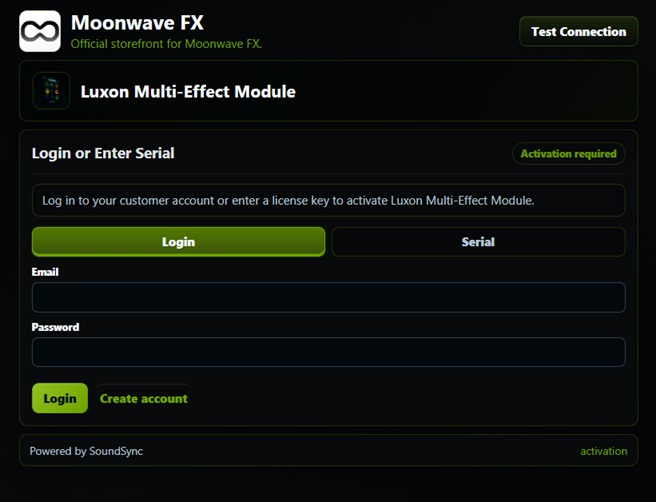
HISE customers can activate from inside the plugin
The HISE login screen shows the customer-facing activation surface with product identity, support context, account login, and serial activation paths.
SoundSync
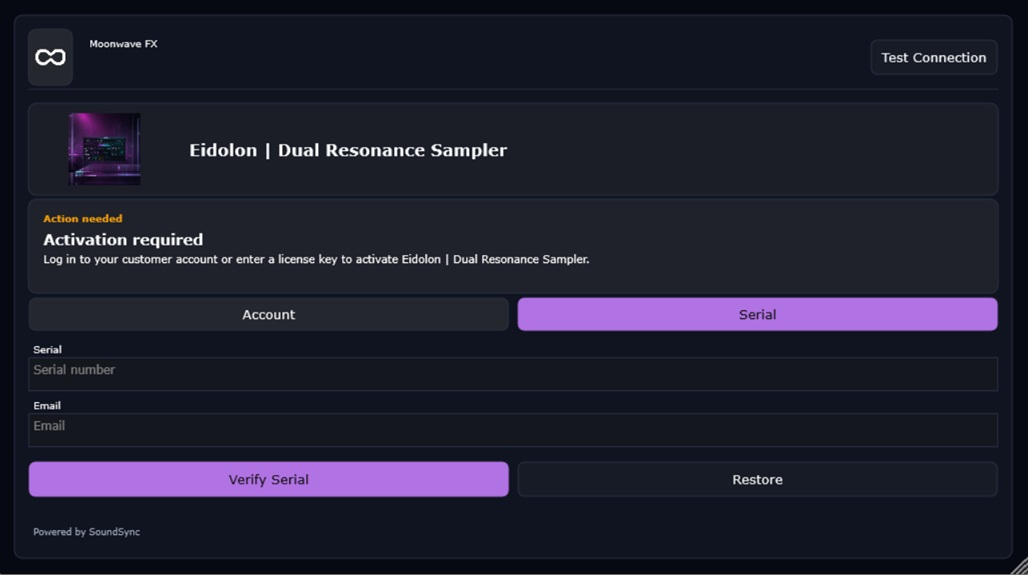
JUCE serial validation is package-ready
The JUCE serial validation screen shows the native package path for serial entry, customer identity, validation, and activation state.
SoundSync
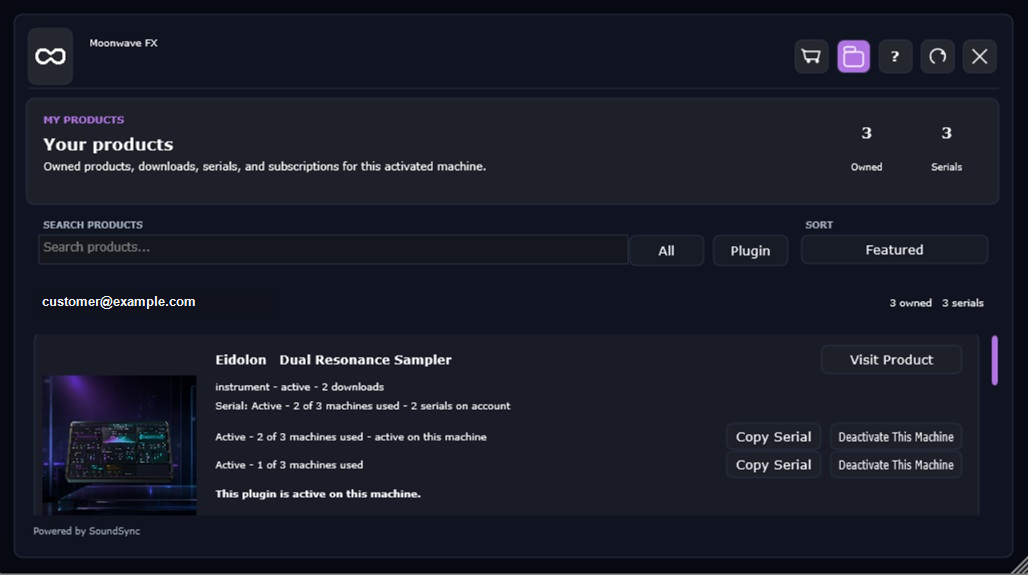
Owned products stay visible after activation
The JUCE My Products screen shows the logged-in customer state with owned product access, serial state, and device actions in the plugin UI.
SoundSync
Product credential model
Product credential model affects whether a plugin can safely decide who should have access and how that decision survives real customer conditions.
Product credential model setup
Tie the integration to product-scoped credentials, activation mode, device policy, package version, and release environment.
Runtime behavior
Use server validation, entitlement state, local cache rules, deactivation, and offline grace according to the selected HISE, JUCE, or API path.
Release confidence
Test success, invalid, revoked, expired, offline, and regeneration cases before treating product credential model as launch-ready.
SoundSync
Test Connection
Test Connection is explained from the launch decision it supports, not as a generic platform module.
Launch decision
Clarify when a developer should use test connection and what must be configured before it goes public.
Customer moment
Describe what the buyer, account holder, or partner sees when test connection affects the experience.
Operational signal
Connect test connection to the settings, activity, reporting, or support context that keeps it understandable after launch.
SoundSync
Serial activation
Serial activation affects whether a plugin can safely decide who should have access and how that decision survives real customer conditions.
Serial activation setup
Tie the integration to product-scoped credentials, activation mode, device policy, package version, and release environment.
Runtime behavior
Use server validation, entitlement state, local cache rules, deactivation, and offline grace according to the selected HISE, JUCE, or API path.
Release confidence
Test success, invalid, revoked, expired, offline, and regeneration cases before treating serial activation as launch-ready.
SoundSync
Customer login
Customer login is explained from the launch decision it supports, not as a generic platform module.
Launch decision
Clarify when a developer should use customer login and what must be configured before it goes public.
Customer moment
Describe what the buyer, account holder, or partner sees when customer login affects the experience.
Operational signal
Connect customer login to the settings, activity, reporting, or support context that keeps it understandable after launch.
SoundSync
Validation
Validation affects whether a plugin can safely decide who should have access and how that decision survives real customer conditions.
Validation setup
Tie the integration to product-scoped credentials, activation mode, device policy, package version, and release environment.
Runtime behavior
Use server validation, entitlement state, local cache rules, deactivation, and offline grace according to the selected HISE, JUCE, or API path.
Release confidence
Test success, invalid, revoked, expired, offline, and regeneration cases before treating validation as launch-ready.
SoundSync
Offline grace
Offline grace affects whether a plugin can safely decide who should have access and how that decision survives real customer conditions.
Offline grace setup
Tie the integration to product-scoped credentials, activation mode, device policy, package version, and release environment.
Runtime behavior
Use server validation, entitlement state, local cache rules, deactivation, and offline grace according to the selected HISE, JUCE, or API path.
Release confidence
Test success, invalid, revoked, expired, offline, and regeneration cases before treating offline grace as launch-ready.
SoundSync
Device limits
Device limits affects whether a plugin can safely decide who should have access and how that decision survives real customer conditions.
Device limits setup
Tie the integration to product-scoped credentials, activation mode, device policy, package version, and release environment.
Runtime behavior
Use server validation, entitlement state, local cache rules, deactivation, and offline grace according to the selected HISE, JUCE, or API path.
Release confidence
Test success, invalid, revoked, expired, offline, and regeneration cases before treating device limits as launch-ready.
SoundSync
Subscription enforcement
Subscription enforcement extends product access across recurring billing and plan changes.
Plan structure
Define monthly, annual, bundle, trial, renewal, and product-access rules before the offer is published.
Lifecycle state
Reflect active, past-due, canceled, expired, upgraded, downgraded, or scheduled-change state in checkout, library, and licensing surfaces.
Customer and developer view
Show customers what access they have while giving developers reporting, failed-payment, and lifecycle context.
SoundSync
Deactivation
Deactivation affects whether a plugin can safely decide who should have access and how that decision survives real customer conditions.
Deactivation setup
Tie the integration to product-scoped credentials, activation mode, device policy, package version, and release environment.
Runtime behavior
Use server validation, entitlement state, local cache rules, deactivation, and offline grace according to the selected HISE, JUCE, or API path.
Release confidence
Test success, invalid, revoked, expired, offline, and regeneration cases before treating deactivation as launch-ready.
SoundSync
Customer library
Customer library has to earn its place on the page by explaining a real product-business outcome.
What changes
State the concrete behavior customer library changes for setup, checkout, access, delivery, growth, or support.
Why it matters
Tie customer library to a developer or customer problem that would otherwise require manual work or disconnected tools.
How it stays visible
Show where status, activity, reporting, or documentation keeps customer library reviewable after release.
SoundSync
HISE, JUCE, and API options
HISE, JUCE, and API options affects whether a plugin can safely decide who should have access and how that decision survives real customer conditions.
HISE, JUCE, and API options setup
Tie the integration to product-scoped credentials, activation mode, device policy, package version, and release environment.
Runtime behavior
Use server validation, entitlement state, local cache rules, deactivation, and offline grace according to the selected HISE, JUCE, or API path.
Release confidence
Test success, invalid, revoked, expired, offline, and regeneration cases before treating hise, juce, and api options as launch-ready.
SoundSync
Security model
Security model protects developer accounts, customer information, and staff access as the business grows.
Access boundary
Limit visibility by workspace, role, product scope, sensitive permission, session state, and credential responsibility.
Privacy expectation
Keep customer data, screenshots, exports, support context, and account information scoped to the people who need it.
Review trail
Use audit activity, session revocation, permission checks, and operational review so access changes are explainable later.
SoundSync
Documentation CTA
Documentation CTA keeps integrations predictable for developers shipping real products.
Contract shape
Document request methods, authentication, request fields, responses, errors, examples, and supported endpoint groups.
Change handling
Use versioning, changelog entries, deprecation notes, release gates, and compatibility guidance before changing public behavior.
Operational proof
Expose delivery logs, retries, idempotency, catalog coverage, and validation results where developers need to debug safely.
SoundSync
Product proof
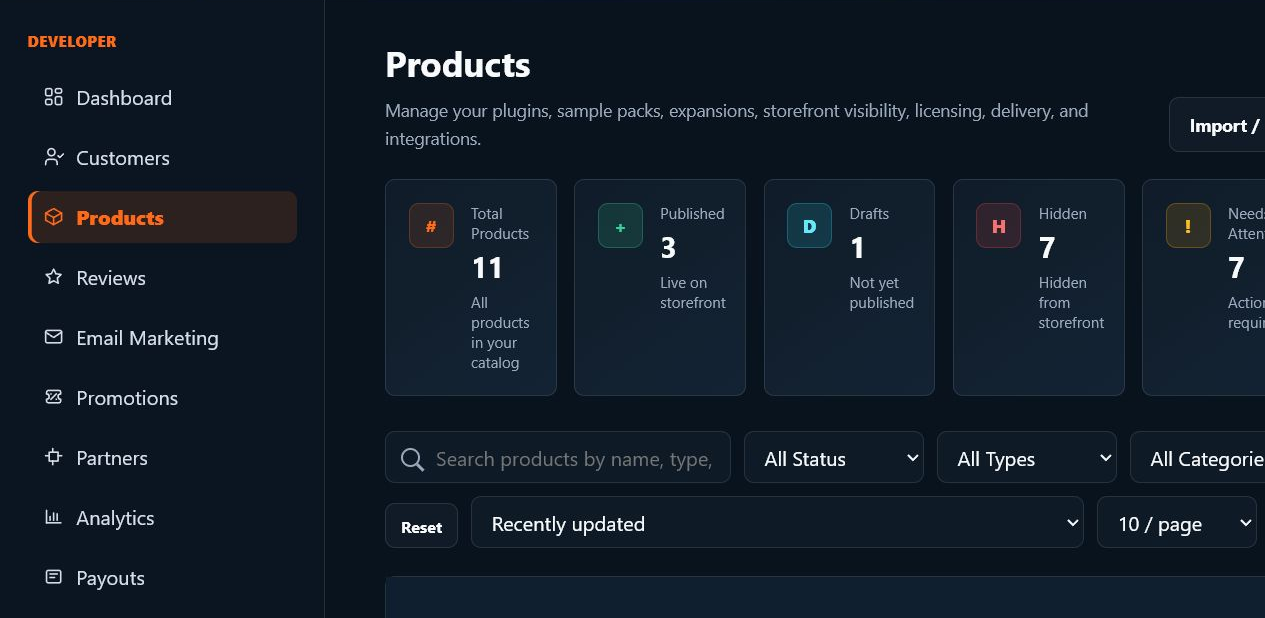
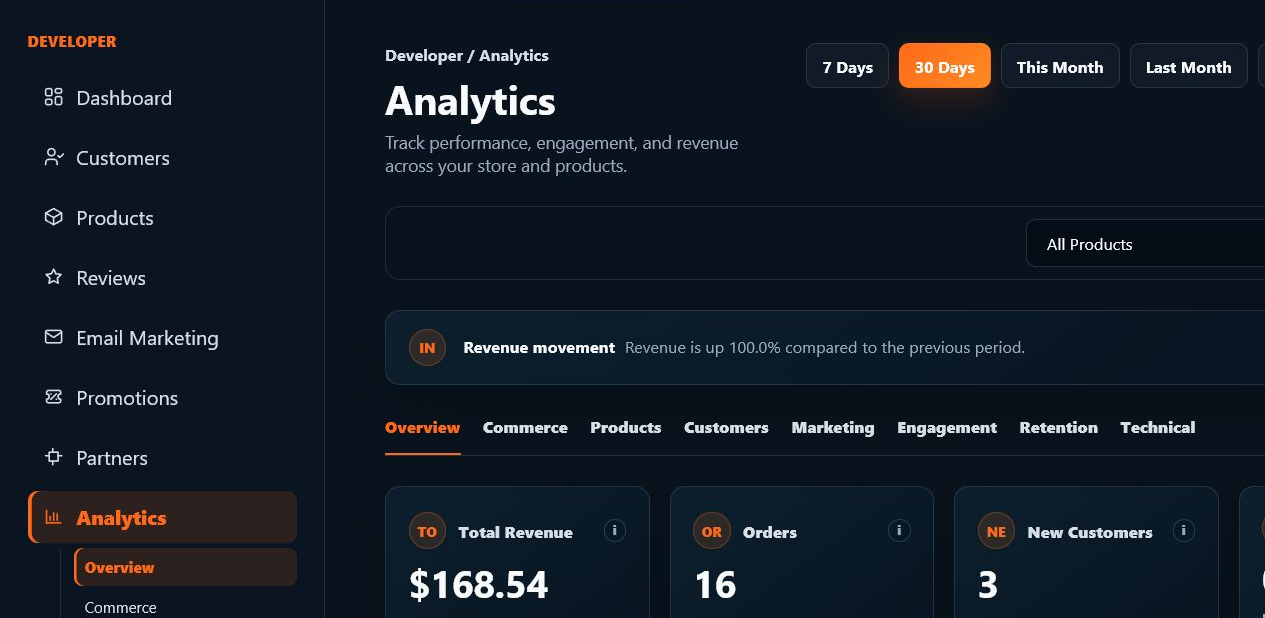
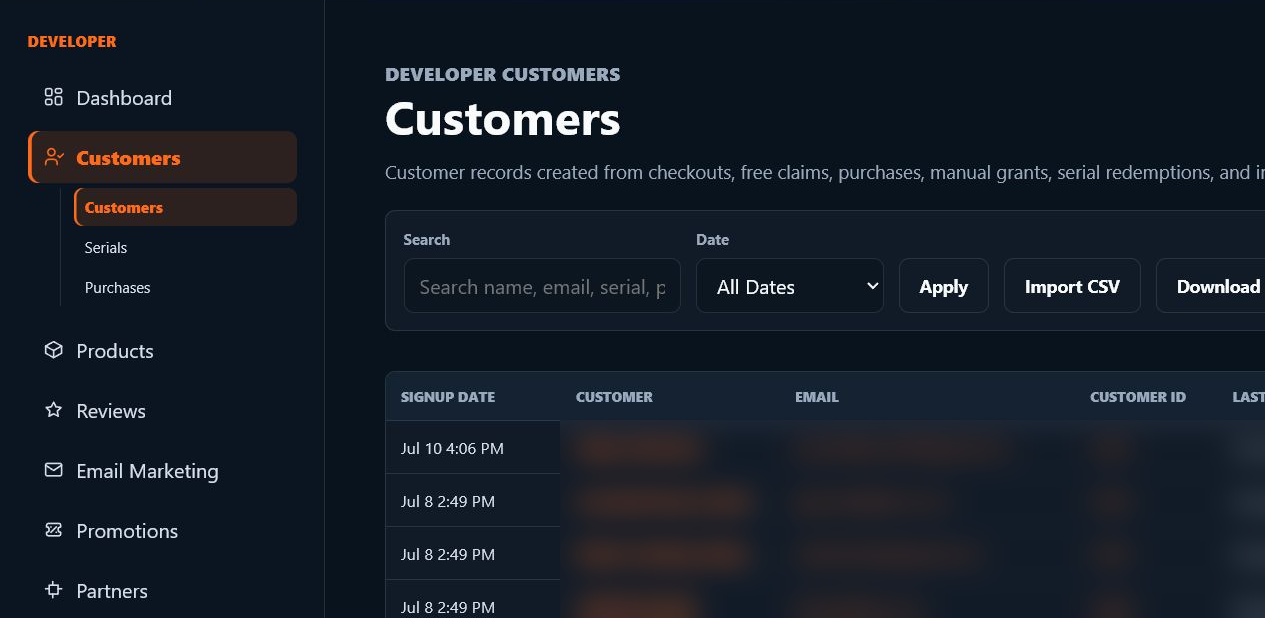
Screenshots and diagrams are placed near the workflows they explain, so visitors see the actual SoundSync surfaces instead of abstract feature claims.
Questions developers ask
Is SoundSync only for plugins?
No. SoundSync supports plugins, instruments, sample libraries, digital downloads, subscriptions, and custom audio tools.
Can I use my own site?
Yes. You can use hosted storefronts, embedded storefronts, standalone embeds, and custom domains depending on the surface you choose.
Does marketplace attribution add another fee?
No. SoundSync uses one 10% fee on SoundSync-processed sales, including marketplace-attributed sales.
Activate customers, validate devices, and keep paid access in sync. belongs in one connected launch system.
Move from setup to customer access, growth, trust, and operations without rebuilding the business around disconnected services.