SoundSync Trust Center
How SoundSync protects access, payments, developer data, and platform changes.
Review the technical and operational controls behind licensing, credentials, team access, commerce, entitlements, delivery, webhooks, API changes, and customer data boundaries.
SoundSync
How SoundSync earns trust across the product path.
Trust is organized around the surfaces developers and customers rely on: accounts, licensing, secure delivery, checkout, privacy, architecture, AI, responsible disclosure, and policy pages.
SoundSync
Managed commerce trust
SoundSync-managed checkout is documented as one connected commerce path, not a pile of disconnected payment claims.
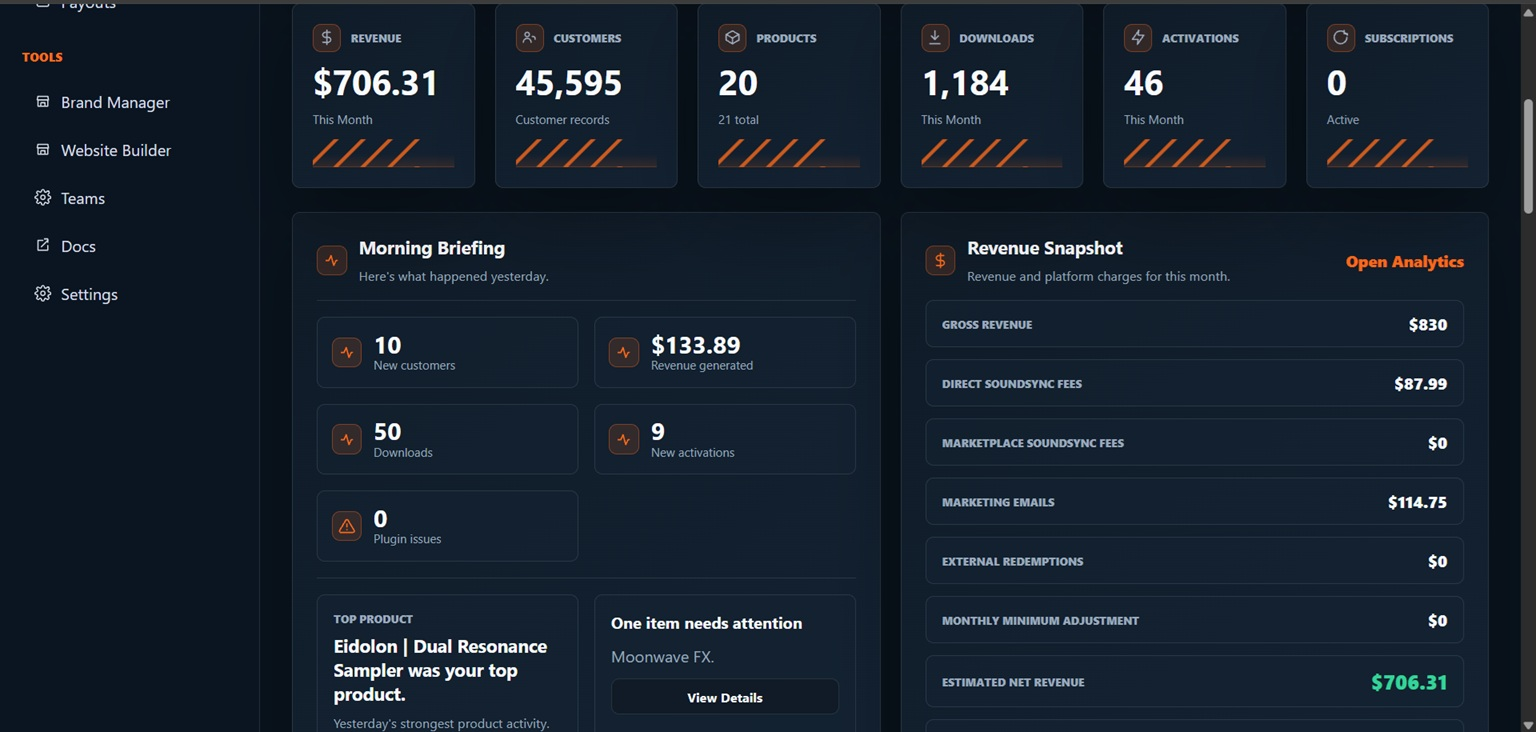
One 10% SoundSync fee
Eligible managed sales use one SoundSync platform fee, including marketplace-attributed sales.
Merchant of Record checkout
SoundSync is the Merchant of Record for SoundSync-managed checkout transactions; external reseller reports and developer-managed channels are treated separately.
Processing covered
SoundSync covers checkout payment-processing costs for SoundSync-managed checkout, so the developer does not owe SoundSync a separate processor fee.
SoundSync
Brand and domain trust
Brand Manager is part of customer trust because it controls what buyers see in storefronts, checkout, accounts, email, and package surfaces.
Main domain or subdomain
Developers can use a main/root/apex domain or a storefront subdomain depending on how their public site is set up.
DNS access only
Developers provide the domain and DNS access; SoundSync provides guided records, verification checks, hosted routing, and SSL certificate provisioning after DNS verifies.
Brand source of truth
Store name, logos, light/dark assets, primary/secondary/tertiary colors, support links, email identity, and package branding come from Brand Manager and product setup.
SoundSync
Licensing package trust
Plugin licensing pages separate fast implementation paths from stronger native enforcement instead of treating every package as identical.
HISEScript path
HISEScript is the fastest HISE package path and supports strong product-scoped checks, with the honest boundary that script/client code is easier to inspect.
HISE C++ path
HISE C++ requires HISE source work and rebuilds, but moves more enforcement into native code and runtime public state.
JUCE package
The JUCE package is current for native activation, validation, deactivation, offline grace, secure persistence, branding, and customer access patterns.
SoundSync
Customer data and communication
SoundSync separates customer ownership, support context, and communication rights so growth tools do not imply unrestricted audience access.
Customer account boundaries
Orders, entitlements, downloads, serials, subscriptions, activations, and support context stay tied to the owning developer workspace.
Marketing consent
Campaigns must follow opt-in, suppression, unsubscribe, bounce, and platform audience rules.
Transactional messages
Receipts, login/security, purchase, license, activation, account, and required delivery emails are treated separately from marketing campaigns.
SoundSync
API and change reliability
Developer integrations need stable contracts and visible change management.
Public endpoint catalog
Supported public endpoints are documented separately from internal, owner-only, unfinished, or operational routes.
Webhooks and idempotency
Webhook signatures, raw-body verification, retries, duplicate-event handling, delivery logs, and idempotency protect integration behavior.
Version and release gates
OpenAPI coverage, examples, changelog entries, compatibility notes, and release checks keep public docs aligned with implemented behavior.
SoundSync
Trust Center categories
Calm, specific pages explain how SoundSync protects product access, customer data, commerce flows, and platform operations.
Licensing and Credential Security
Native plugin credentials reduce scope and support rotation and revocation, but any credential embedded in distributed client software must be treated as extractable under a sufficiently capable attacker.
Read Licensing and Credential SecurityCommerce, Orders, and Payment Integrity
SoundSync's documentation describes current platform behavior. It does not replace legal, accounting, or tax advice.
Read Commerce, Orders, and Payment IntegrityDeveloper Data, Privacy, and Team Access
SoundSync separates workspaces, product scopes, fixed roles, sensitive permissions, sessions, audit logs, and customer data boundaries.
Read Developer Data, Privacy, and Team AccessWebhooks, API Reliability, and Change Control
Webhook signatures, retries, duplicate events, idempotency, endpoint catalog coverage, OpenAPI, versioning, deprecations, changelog entries, and release gates protect integration behavior.
Read Webhooks, API Reliability, and Change ControlSoundSync
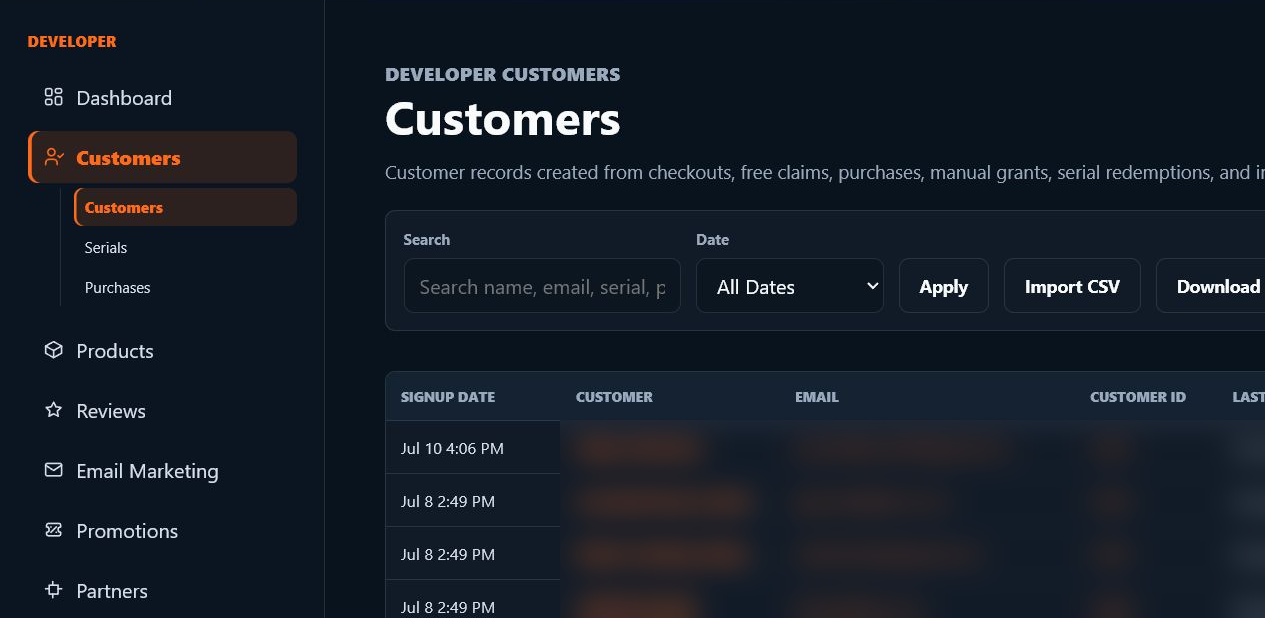
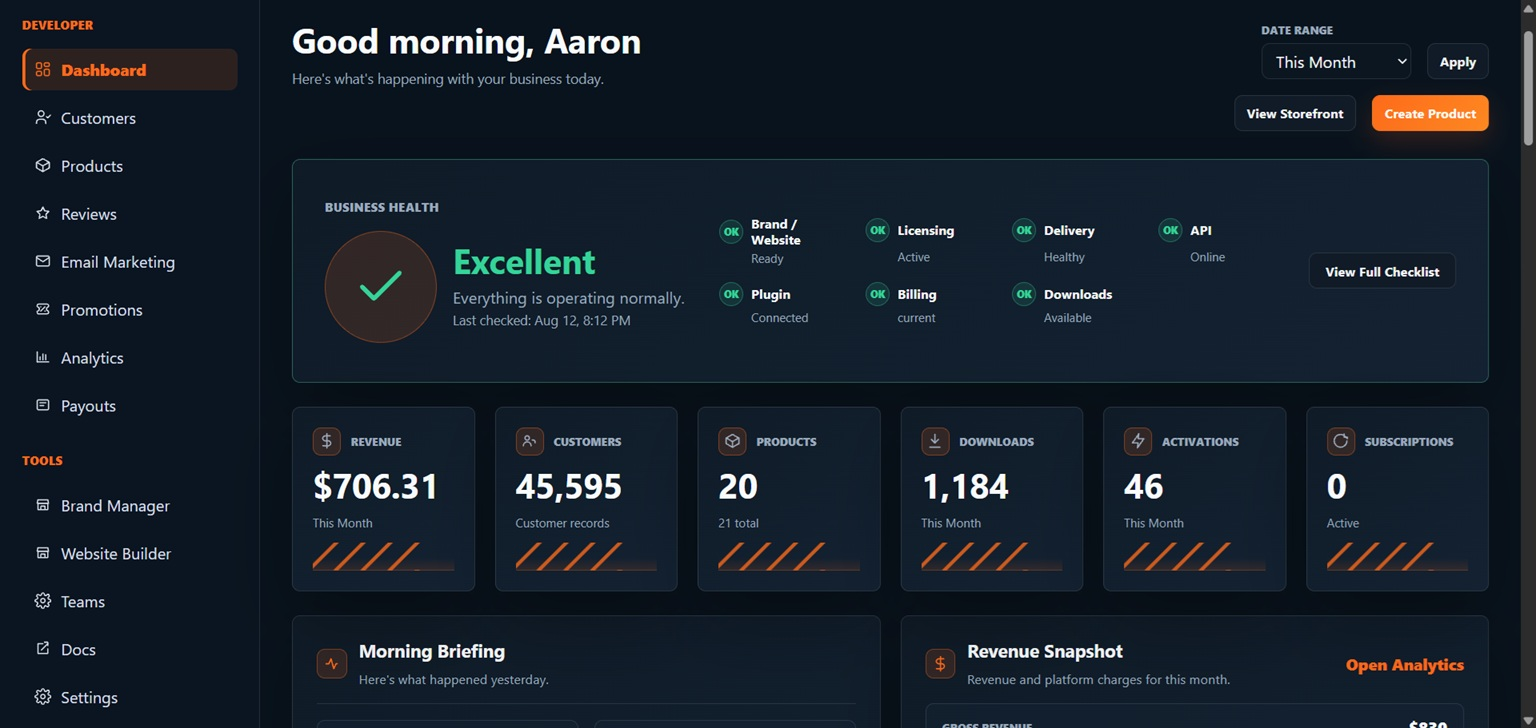
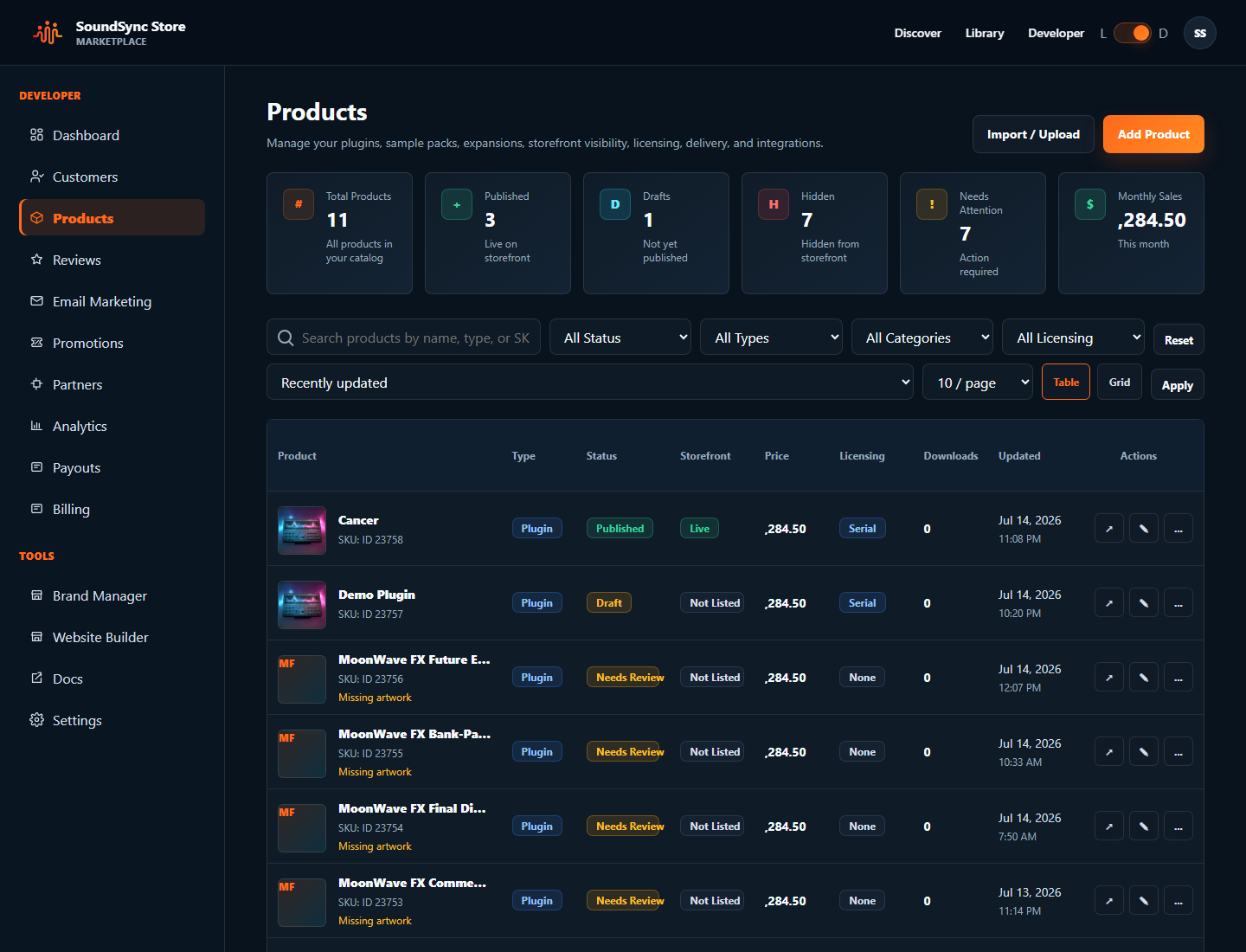
Product proof
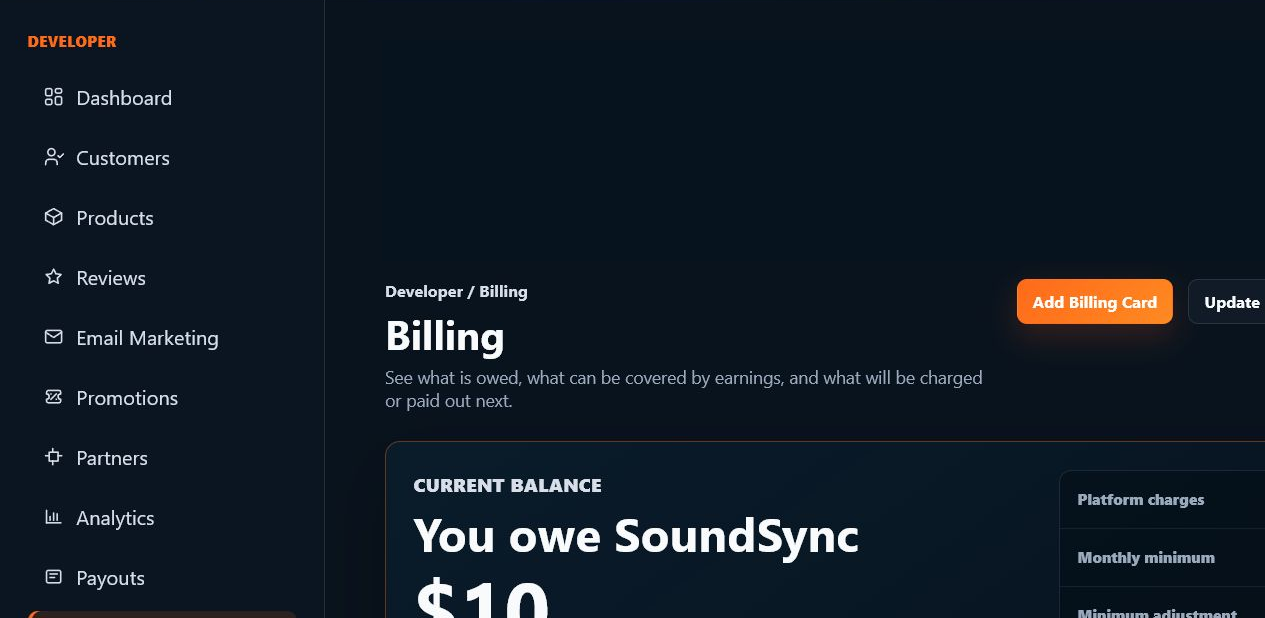
Screenshots and diagrams are placed near the workflows they explain, so visitors see the actual SoundSync surfaces instead of abstract feature claims.